
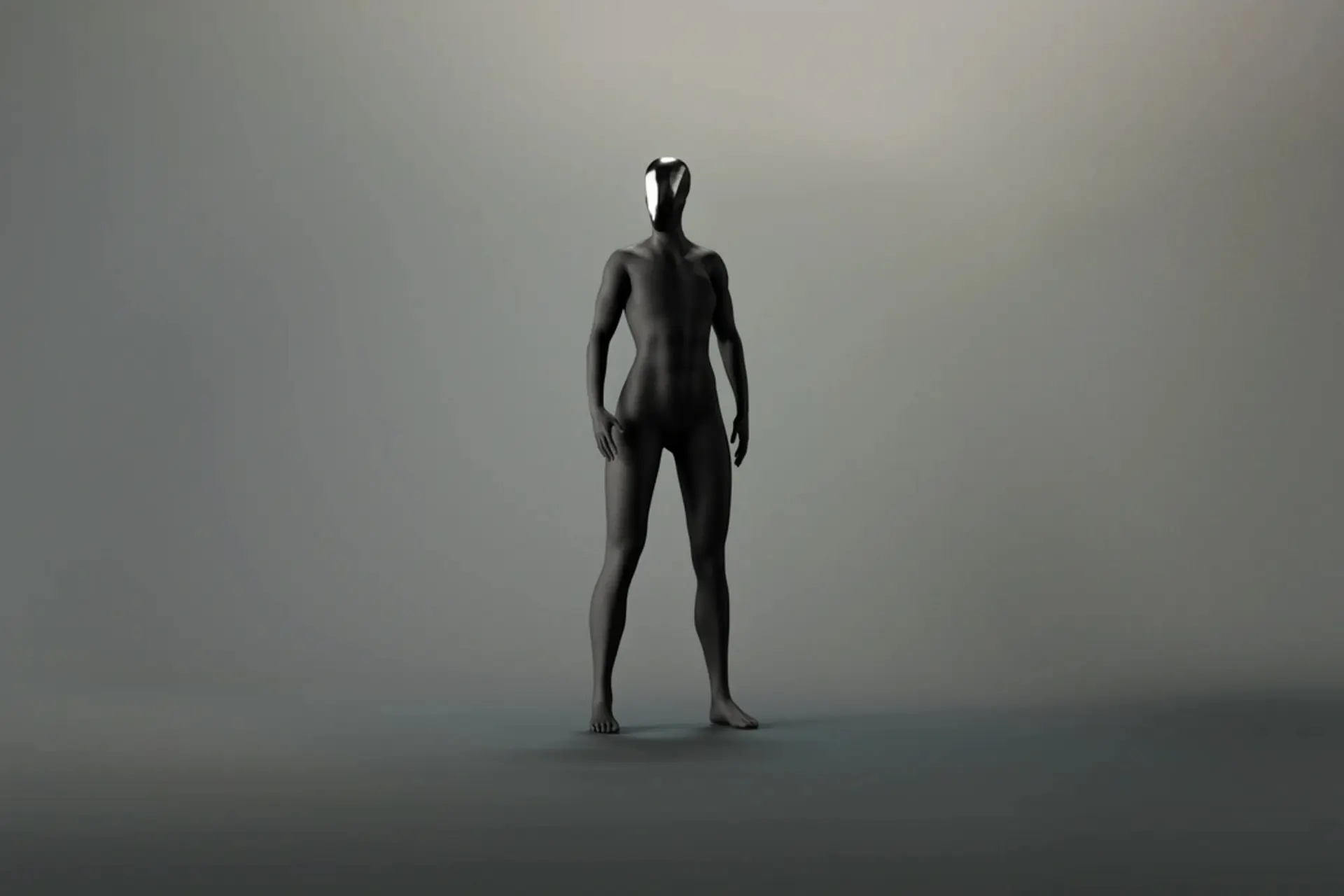
The landscape of home automation is undergoing a dramatic transformation as Clone Robotics presents their sophisticated humanoid robot, Protoclone. This groundbreaking machine embodies the next evolution in domestic assistance, merging human-like motion capabilities with extraordinary technological advancement. Recent demonstration footage reveals the prototype mounted from above, performing movement sequences that showcase both the remarkable potential and developmental challenges of this pioneering technology.
Revolutionary Humanoid Robot Architecture
The Protoclone establishes itself as a humanoid robot that fundamentally diverges from traditional robotics engineering. The system features a comprehensive polymer skeletal structure that precisely reproduces all 206 bones present in human anatomy. This ambitious biomimetic approach serves a greater purpose beyond aesthetics — it represents Clone Robotics' broader mission to develop household robots capable of effortlessly manipulating tools and devices originally engineered for human operators.
The skeletal architecture provides the foundation for natural movement patterns that conventional robotic systems cannot achieve. By replicating human bone structure, the Protoclone gains the ability to interact with everyday objects in ways that feel intuitive and familiar. Door handles, kitchen appliances, cleaning tools — all become accessible to a robot that moves like its human counterparts.
This anatomical precision extends to joint configurations, allowing for the same range of motion that humans possess. The result is a robot that can navigate human-designed spaces without requiring environmental modifications or specialized equipment.
Groundbreaking Myofiber Muscle Technology
What genuinely distinguishes the Protoclone is its elaborate muscular architecture, incorporating more than 1,000 synthetic muscles powered by the company's proprietary Myofiber technology. This pioneering system advances the McKibben pneumatic muscle principle, marking a substantial leap forward in robotic locomotion capabilities.
The Myofiber system functions through an elegant mechanism: mesh tubes housing balloons contract upon filling with hydraulic fluid, simulating biological muscle function. Central to this system — in the most literal sense — operates a 500-watt electric pump serving as the robot's mechanical cardiovascular system, capable of circulating hydraulic fluid at an impressive 40 standard liters per minute.
This approach offers several advantages over traditional electric motors and solenoid actuators. The artificial muscles provide smoother, more organic movements while delivering impressive strength-to-weight ratios. The hydraulic system also allows for precise force control, enabling the robot to handle both delicate objects and heavier items with appropriate grip strength.
The muscle system operates at 100 PSI, providing sufficient force for household tasks while maintaining the compliance necessary for safe human interaction. Unlike rigid actuators, these artificial muscles naturally absorb impacts and adapt to unexpected contact, making them inherently safer for domestic environments.
Sophisticated Sensory Network
The Protoclone's advanced neural system encompasses:
- Four depth cameras embedded within the cranial structure for visual perception
- 70 inertial sensors enabling precise joint position monitoring
- 320 pressure sensors delivering essential force feedback data
This extensive sensory network enables the robot to respond to visual stimuli in real-time and, perhaps most notably, acquire new skills simply by watching humans execute them. The integration of these systems represents a meaningful advancement toward developing genuinely adaptive robotic assistants.
The depth cameras provide three-dimensional environmental mapping, allowing the robot to navigate complex spaces and identify objects with remarkable accuracy. Combined with advanced computer vision algorithms, the Protoclone can recognize household items, understand spatial relationships, and plan movements accordingly.
The inertial sensor array ensures the robot maintains precise awareness of its own body position — a capability known as proprioception in biological systems. This self-awareness proves crucial for coordinated movement and prevents the awkward, mechanical motions often associated with traditional robots.
Pressure sensors distributed throughout the robot's structure provide continuous feedback about contact forces. This enables delicate manipulation tasks, from handling fragile glassware to adjusting grip strength when carrying objects of varying weights. The system can detect when something is slipping and automatically adjust its hold.
Learning Through Observation
Among the Protoclone's most impressive capabilities is its ability to learn by watching. Rather than requiring explicit programming for each task, the robot can observe a human performing an action and replicate it. This dramatically simplifies the process of teaching new skills and makes the robot adaptable to individual household needs.
The learning system combines visual observation with the robot's understanding of its own body mechanics. When watching a human fold laundry or load a dishwasher, the Protoclone translates those movements into commands for its own muscle system, accounting for differences in proportion and capability.
This observational learning extends to understanding context and intent. The robot doesn't merely copy movements — it comprehends the goal behind actions and can adapt its approach when circumstances differ from the demonstration. If obstacles appear or objects are positioned differently, the Protoclone adjusts its strategy accordingly.
Continue reading in Part 2: Industry competition, production plans, technical specifications, and the future of humanoid robotics.