
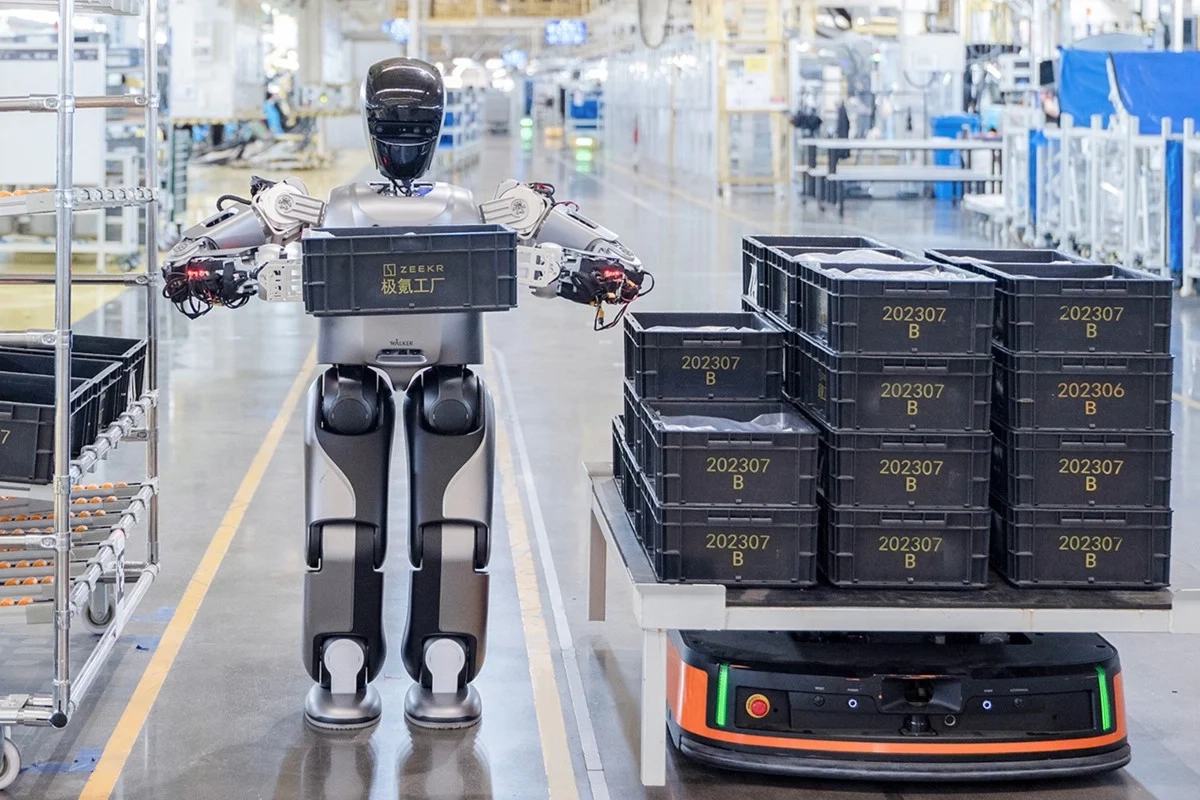
The Robotics Revolution of 2025
The worldwide robotics sector is witnessing an extraordinary transformation in 2025. Contemporary robots have evolved far beyond performing impressive acrobatics — they now operate factory production lines, deliver exceptional customer experiences, and integrate seamlessly into daily routines. From American innovators to Asian manufacturing powerhouses, the robotics industry is fundamentally reshaping our world.
Industry Pioneers Driving Innovation
Boston Dynamics: Defining Modern Robotics
Boston Dynamics continues to set the standard for anthropomorphic robot development. Throughout 2025, Hyundai is deploying tens of thousands of Atlas robots across its manufacturing facilities for automated automotive component sorting. These Atlas units feature enhanced "super vision" capabilities developed through strategic collaboration with leading South Korean electronics manufacturers.
The company's innovative robotic platforms find applications extending beyond industrial settings into logistics and distribution networks. Following the transition from hydraulic to fully electric Atlas configurations, Boston Dynamics has achieved superior efficiency while significantly reducing environmental impact.
Chinese Manufacturers Leading Mass Production
Chinese robotics leader UBTech has announced plans to deliver 500-1,000 Walker S industrial humanoid robots during 2025. China's national strategy targets establishing mass humanoid robot production capabilities by 2025, with goals to achieve world-class technological standards by 2027.
Chinese automotive manufacturers have pivoted dramatically toward humanoid robot development, signaling the nation's serious commitment to robotics leadership. This strategic shift carries particular significance for logistics optimization and advanced manufacturing processes.
Robot Categories Shaping Modern Industry
Service Robots: Transforming Daily Operations
Service robots assist humans with challenging and repetitive tasks across both personal and commercial environments. These systems range from home assistants to sophisticated enterprise solutions, establishing themselves as essential components of the modern technological landscape.
Autonomous cleaning systems and AI-powered service platforms have gained particular prominence. Market analysis reveals accelerating demand for intelligent service robotics solutions across all sectors.
Industrial Robots: The Automation Foundation
Industrial robots function as automatically controlled, reprogrammable manipulators designed for manufacturing applications. These systems handle welding, painting, assembly, packaging, and material handling operations with precision and consistency.
Leading manufacturers dominating this space include:
- FANUC — Japanese industrial automation conglomerate and global robot manufacturing leader
- ABB — Swiss multinational specializing in robotics and automation
- KUKA — German engineering company with extensive robotics portfolio
- Yaskawa — Japanese corporation pioneering motion control and robotics
Specialized Military and Scientific Applications
Military robotics addresses reconnaissance, explosive ordnance disposal, and security patrol requirements. Scientific robots enable research in space exploration, deep ocean investigation, and hazardous environment studies. Recent innovations include robotic systems integrated with wildlife populations for behavioral research — Chinese zoologists successfully deployed a robotic animal within rare Tibetan antelope herds for non-invasive observation.
Core Technologies Enabling Progress
Artificial Intelligence and Machine Learning Integration
Contemporary robots incorporate sophisticated AI systems enabling dynamic adaptation to novel tasks and environments. The 2025 service robotics landscape demonstrates remarkable advances in autonomous decision-making and operational flexibility.
Advanced Sensing and Navigation
Modern robotics advancement depends critically on perfected sensor technologies. Robots employ LIDAR systems, computer vision cameras, ultrasonic arrays, and tactile sensors to perceive and interact with their surroundings effectively.
Application Domains Across Industries
Consumer and Entertainment Robotics
Robotic vacuum cleaners, companion robots, and entertainment devices are becoming household standards. Commercial service robots demonstrate successful deployment across hospitality, retail, and food service sectors.
Healthcare Robotics Revolution
Surgical robots, rehabilitation systems, and patient care assistants are transforming medical practice. These platforms enhance precision, reduce recovery times, and extend healthcare capabilities to previously underserved populations.
Market Outlook and Growth Projections
The robotics market exhibits consistent expansion with forecasts projecting substantial production volume increases throughout the coming years. Beijing will host the inaugural World Humanoid Robot Games in August 2025, showcasing the entertainment and competitive potential of advanced robotics.
Challenges and Considerations
Ethical Dimensions
Accelerating robotics development raises important questions regarding workforce displacement, data privacy protection, and autonomous system safety. Establishing comprehensive ethical frameworks for responsible robot deployment remains essential.
Technical and Security Challenges
Robot cybersecurity, AI system reliability, and potential autonomous operation failures demand continuous attention from developers, operators, and regulatory bodies. Ensuring robust safety protocols protects both users and the broader public.
Looking Forward
Robotics development in 2025 demonstrates impressive innovation velocity and transformative potential. From industrial manufacturing systems to personal assistants, robots are establishing themselves as integral elements of contemporary life. The achievements of industry leaders like Boston Dynamics alongside emerging Asian manufacturers confirm that the future has arrived.
Key trends shaping the industry include:
- Expanding autonomous capabilities
- Enhanced human-robot collaboration interfaces
- Broadening application domains
- Improved energy efficiency and sustainability
- Greater affordability and accessibility
Maintaining responsible approaches to technology development ensures safety and ethical standards keep pace with innovation — creating a future where humans and robots work together productively.
Learn More
For detailed information about specific robotic solutions available in Armenia, contact ASMO — your authorized partner for PUDU Robotics and KEENON Robotics. Our team provides consultation, delivery, training, and ongoing support for commercial and industrial robot deployments.