
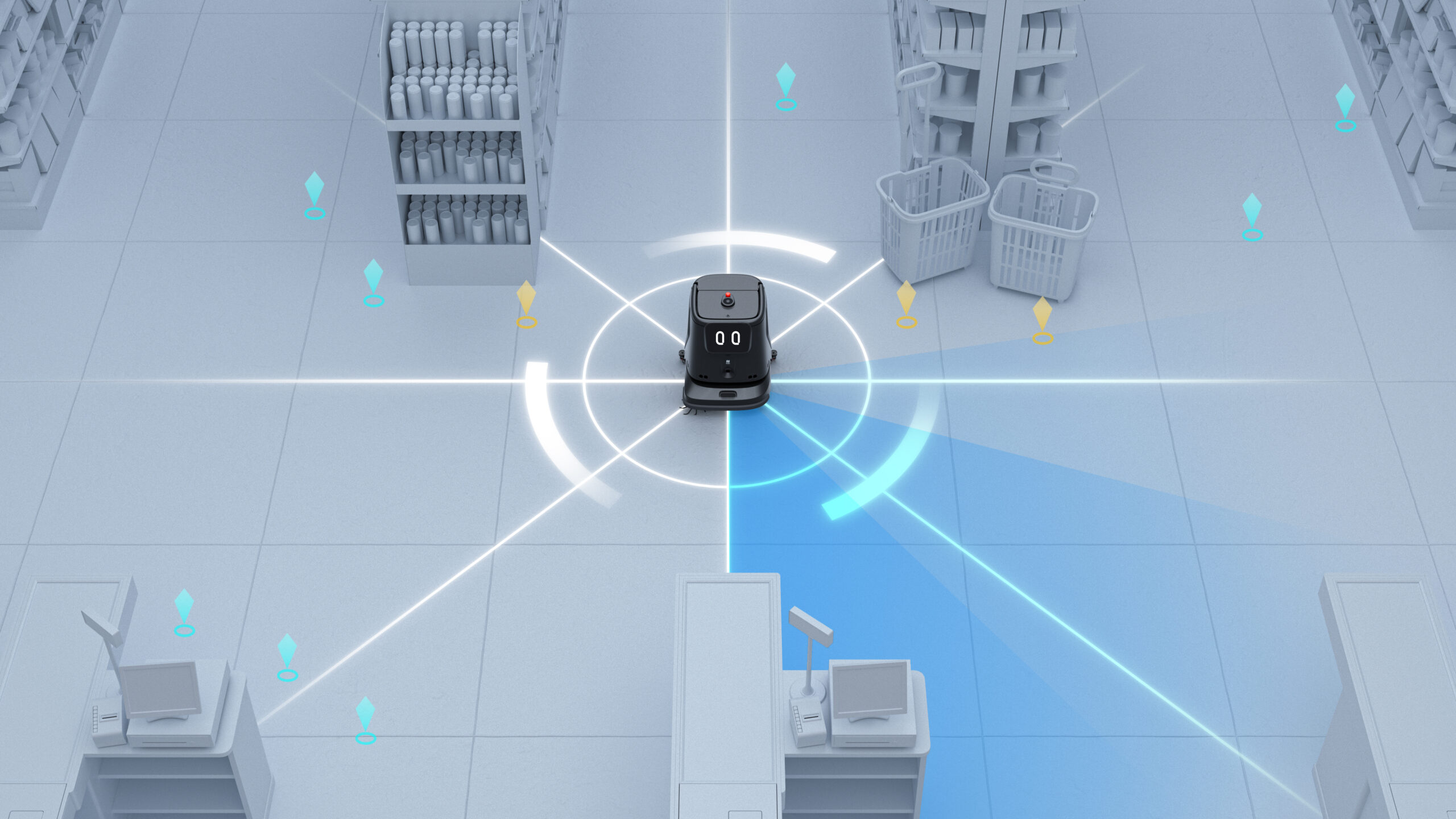
Service robotics is experiencing unprecedented momentum, establishing 2025 as a watershed moment for the entire industry. Have you observed how seamlessly robots have integrated into our everyday existence? Just yesterday we marveled at robotic vacuum cleaners, yet today at Singapore airports, autonomous cleaning units methodically maintain floors, Japanese hospitals employ automated assistants for medication delivery, and Chinese restaurants feature mechanical servers attending to millions of patrons. This represents our current reality, not distant fantasy.
The Quiet Transformation of Service Robotics
Service robotics has achieved a qualitative breakthrough over the past half-decade. Concepts that once seemed futuristic at technology exhibitions have now become standard fixtures in offices, retail establishments, dining venues, and residences globally. Robotic assistants no longer provoke astonishment — they have evolved into essential components of contemporary infrastructure.
This transformation unfolds quietly yet persistently. Daily, millions interact with robots without conscious awareness. From autonomous vacuum units in apartments to sophisticated logistics systems in distribution centers — service robotics has permeated every life domain.
What distinguishes this transformation is its organic character. Robots did not displace humans abruptly but progressively integrated into existing workflows, augmenting and amplifying human capabilities. This established a distinctive collaborative ecosystem between people and machines.
Historical Development Trajectory
Service robotics evolution divides into several pivotal phases. The initial phase (2000-2010) featured the emergence of basic robot vacuums and companion toy robots. The subsequent phase (2010-2020) witnessed industrial robot advancement and the first substantive service solutions for commercial applications.
The third phase, commencing in 2020, marked a period of mass deployment and technological breakthrough. During this interval, service robotics evolved from a specialized technology into a mainstream phenomenon.
Acceleration Factors: Why This Moment?
The Pandemic as Innovation Catalyst
The pandemic emerged as an unexpected accelerant for the robotics revolution. When global circumstances demanded contactless service, the industry responded with explosive expansion. Implementation timelines projected for 2030 materialized by 2022. Restaurants, hotels, healthcare facilities, warehouses — all commenced rapid transitions to robotic solutions.
COVID-19 generated optimal conditions for service robotics deployment. Requirements to minimize human contact, ensure personnel and customer safety, and maintain operational continuity became paramount. Robots demonstrated themselves as ideal solutions for these challenges.
According to International Federation of Robotics data, the service robotics market expanded by 37% in the previous year alone. By 2029, analysts forecast market volume reaching $95 billion. These figures indicate fundamental shifts in how we live and conduct business.
Technological Maturation
Concurrent with the pandemic, technological maturation of essential service robotics components occurred. Breakthroughs in artificial intelligence, computer vision, sensor technology, and battery systems created an optimal technological foundation for developing efficient service robots.
Manufacturing cost reductions proved equally critical. Lidar costs decreased tenfold over five years, processors gained power while improving energy efficiency, and machine learning algorithms became more accessible and simpler to deploy.
Evolving Social Perspectives
An equally significant factor involved shifting societal attitudes toward robots. Previously associated with employment threats, robots are now perceived as beneficial assistants. Younger generations, raised with digital devices and AI assistants, naturally accept robots as normal life components.
Contemporary Service Robot Diversity
Robotic Servers and Delivery Systems
Modern service robots exhibit remarkable variety. Consider those already working among us:
Robotic servers and delivery systems represent among the most visible service robotics categories. Envision an elegant robot with feline-styled features that does more than transport food trays. It identifies dishes through computer vision, can describe ingredients and preparation methods, and recalls regular guest preferences. In major hotels, such assistants deliver orders directly to rooms, navigating complex corridors more efficiently than new staff members.
Robot server evolution proves impressive. Early iterations were unwieldy and required constant oversight. Contemporary robot servers independently navigate crowded restaurants, prevent collisions with patrons, properly arrange dishes, and even maintain basic conversations with customers.
Advanced Industrial Robotics
Industrial systems represent another crucial service robotics category. Amazon warehouses employ thousands of robots capable of lifting and relocating loads up to 500 kilograms. Beyond simple box transportation, these intelligent systems optimize logistics, reducing order processing from hours to minutes. Similar solutions now appear in standard warehouses and production facilities worldwide.
Modern industrial robots differ fundamentally from predecessors. They feature sophisticated safety systems enabling secure operation alongside humans. Collaborative robots (cobots) adapt to human presence, reducing movement speed or halting entirely upon detecting potential hazards.
Intelligent Cleaning Systems
Next-generation cleaning robots merit particular attention. Dismiss notions of primitive floor-washing machines. Contemporary robotic cleaners incorporate lidars, cameras, and artificial intelligence. They autonomously construct room maps, identify contamination types, and select optimal cleaning modes. Certain models even operate elevators, transitioning between floors without human assistance.
These robots optimize cleaning processes beyond basic maintenance. They determine optimal cleaning schedules, identify areas requiring special attention, and even predict when their own systems need servicing.
Medical Assistant Robotics
Within healthcare, service robotics fulfills critically important functions. Hospital robots execute essential tasks: medication delivery, laboratory sample transport, and room disinfection using ultraviolet technology. During the pandemic, they enabled minimizing patient-staff contact, preserving lives.
Medical robots face exceptional safety and reliability standards. They must operate in sterile environments, precisely follow medical protocols, and guarantee complete patient confidentiality. Contemporary medical robots meet these demands, often providing safety levels exceeding human capabilities.
Service Robotics in Armenia
Organizations in Armenia looking to implement service robotics can connect with ASMO Robotics. As an authorized distributor for industry leaders including PUDU and KEENON, ASMO delivers comprehensive consultation, deployment, and ongoing support. Contact ASMO to discover how service robots can revolutionize your operations across hospitality, healthcare, retail, or logistics sectors.
Continue reading in Part 2: AI Revolution, Economic Impact, and the Future of Service Robotics.