
The Rise of Service Robots
The global robotics market is undergoing a fundamental transformation. Automation once meant massive industrial machinery confined to factory floors. Today, service robots are leading the charge. These intelligent machines work directly alongside people in hotels, restaurants, shopping centers, hospitals, and warehouses.
Industry analysts project substantial growth for service robotics. For businesses worldwide, the message is clear: embrace this technology or risk competitive disadvantage. This guide is designed for leaders and entrepreneurs seeking to understand how service robots transform operations — and how to prepare for successful implementation.
Service Robots in Action: Real Business Applications
Service robots are no longer futuristic concepts. They are proven tools delivering measurable efficiency improvements across industries.
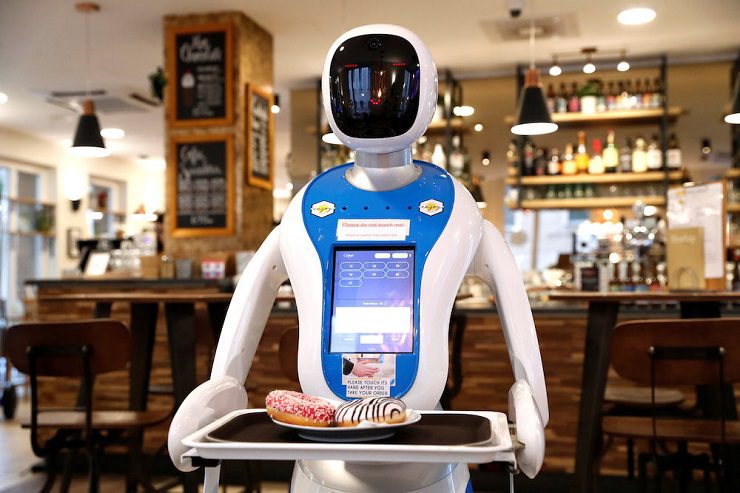
Robotic Waiters and Assistants in HoReCa
Robots in restaurants, cafés, and hotels handle routine, physically demanding tasks that previously consumed staff time and energy.
How it works: A robot waiter receives orders from the kitchen system. Using LiDAR sensors and SLAM navigation technology, it delivers food safely to the designated table while avoiding obstacles and other staff.
Key benefits:
- Reduced staff workload: Employees walk significantly less, allowing them to focus on guest interaction and service quality
- Consistency and speed: Robots maintain performance without fatigue, delivering orders efficiently even during peak hours
- Innovation appeal: Service robots attract curious customers and build a modern, technology-forward brand image
Autonomous Cleaning Robots
Maintaining cleanliness across large commercial spaces represents an ideal application for service robotics.
How it works: The robot surveys the environment and generates a detailed map. Operating on programmed schedules, it navigates around obstacles and returns to its charging station automatically when battery levels drop.
Key benefits:
- Consistent quality: Robots cover entire designated areas and generate detailed work reports for verification
- Cost optimization: Reduced dependence on manual labor lowers ongoing operational expenses
- Enhanced safety: After-hours cleaning minimizes disruption and risk to visitors
Warehouse and Logistics Robots
E-commerce and logistics operations have been revolutionized by Autonomous Mobile Robots (AMRs).
How it works: Robots receive task assignments from Warehouse Management Systems (WMS). They transport shelving units to workers ("goods-to-person" model) or move containers between locations autonomously.
Key benefits:
- 2-3x productivity gains: Workers remain stationary while robots bring items to them, saving up to 70% of walking time
- Improved accuracy: Automation virtually eliminates order-picking errors
- Flexible scalability: Additional robots can be deployed quickly during peak seasons
Implementation Strategy: Beyond the Purchase
Successful automation requires comprehensive planning. Acquiring service robots alone is insufficient — organizations must prepare their entire operational environment.
Step 1: Audit Operations and Define Objectives
Identify process bottlenecks. What specific problem should robotics address? Staff shortages? Error rates? Quality inconsistency? Establish clear, measurable KPIs to evaluate success.
Step 2: Prepare Infrastructure and Processes
Robot deployment requires environmental adaptations:
- Ensure level flooring and adequate aisle widths
- Verify robust Wi-Fi coverage throughout operational areas
- Redesign workflows to optimize human-robot collaboration
- Confirm software integration capabilities with existing POS or WMS platforms
Step 3: Manage Change and Train Teams
Employee concerns about replacement are natural. Communicate clearly that service robots function as assistants — handling demanding physical tasks while humans focus on higher-value activities. Train staff on robot management and involve them in testing phases to build ownership and confidence.
Market Trends Shaping Service Robotics
Several technological and business model innovations are accelerating service robot adoption:
Artificial Intelligence Integration
AI capabilities make robots increasingly intelligent. Enhanced obstacle avoidance, natural language understanding, and adaptive behavior enable truly autonomous operation in dynamic environments.
Robots-as-a-Service (RaaS)
This subscription model eliminates substantial upfront capital requirements. Organizations lease robots for monthly fees that include software updates and maintenance support. RaaS dramatically improves accessibility for small and medium businesses.
Fleet Interoperability
Enterprises often deploy multiple robot types from different manufacturers. Unified management platforms enable coordinated control of heterogeneous fleets through single interfaces.
Implementation Challenges
Automation brings considerations that require careful attention:
Total Cost of Ownership
Evaluate complete costs including integration, training, and ongoing maintenance — not merely initial purchase price.
Cybersecurity
Network-connected service robots present potential vulnerability surfaces. Partner with providers who prioritize security architecture and regular updates.
Customer Experience
Most customers respond positively to robotic service. However, establish protocols for handling malfunctions gracefully — robots should solve problems, not create them.
Regulatory Environment
Legal frameworks governing autonomous robots in public spaces continue developing. Understand liability considerations and compliance requirements in your jurisdiction.
The Future: Human-Robot Synergy
Service robots represent a fundamental business evolution. They automate repetitive work, improve accuracy, and liberate staff for creative, customer-focused responsibilities.
Success depends on thoughtful integration and team preparation. Organizations embracing service robots today position themselves for market leadership tomorrow.
The future is not human replacement — it is effective human-robot collaboration.
Service Robots in Armenia
The Armenian market is actively adopting service robotics solutions across hospitality, retail, and commercial sectors. ASMO Robotics serves as the authorized distributor for leading robot manufacturers including PUDU Robotics and KEENON Robotics in Armenia.
Businesses throughout Armenia can access:
- Professional consultation and needs assessment
- Direct supply of service robots from global manufacturers
- Installation, configuration, and staff training
- Ongoing technical support and maintenance
Whether you operate a restaurant in Yerevan, manage a hotel, or run warehouse operations, ASMO provides the expertise and equipment to implement service robotics successfully.
Contact ASMO to explore how service robots can transform your Armenian business operations.